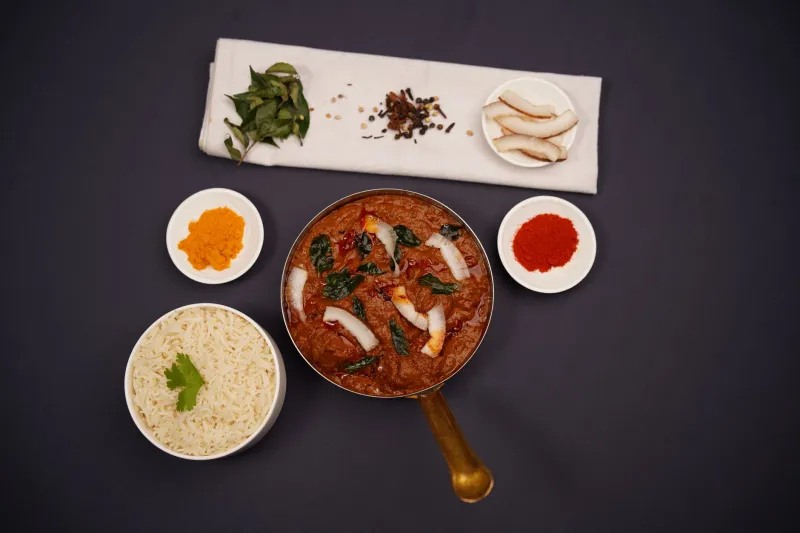
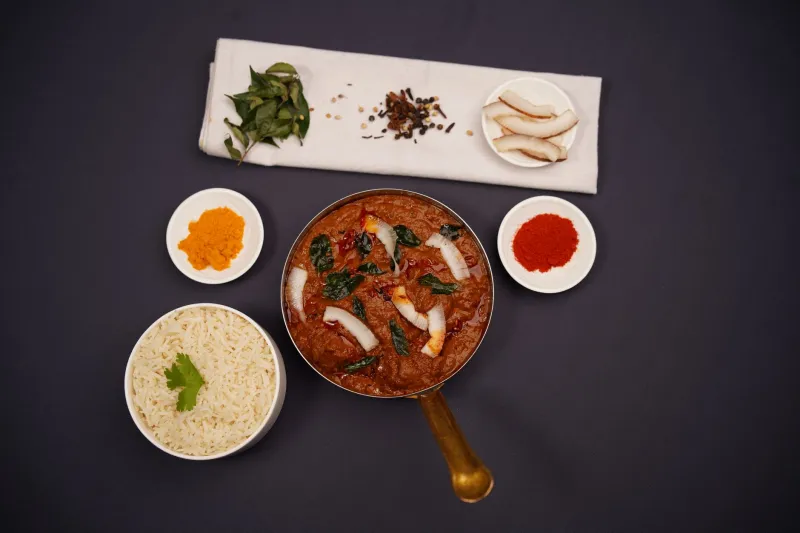
Eight Spices, Infinite Possibilities: The Chettinad Minimalist Pantry That Outperforms a Full Spice Rack
Open the average American spice cabinet and you'll find a graveyard. Smoked paprika from 2021. A tin of allspice bought for one holiday recipe. Three different versions of chili powder, none of them particularly fresh. A jar of "Italian seasoning" that's been there so long it's more beige than green.
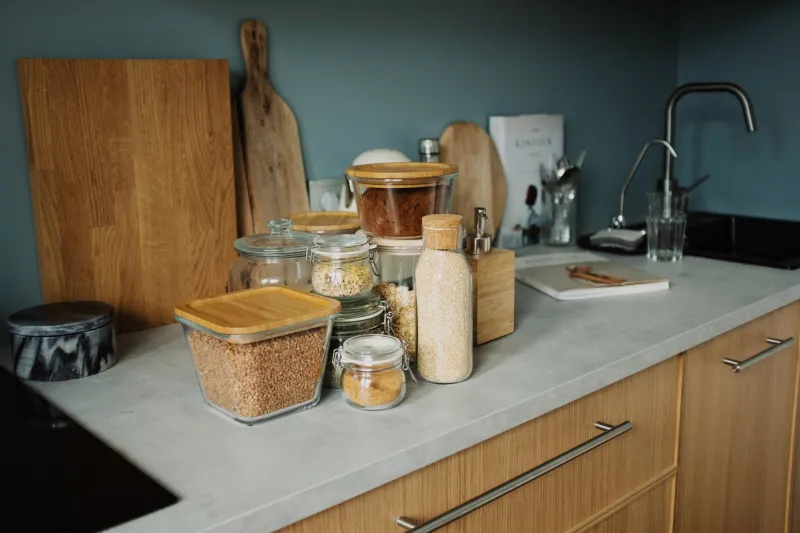
Now picture a Chettinad kitchen. The spice collection is smaller than you'd expect. But every single jar is working, rotating, and being used in ways that multiply the flavor possibilities far beyond what a cabinet stuffed with forty specialty items can produce.
This is the core principle behind Chettinad spice philosophy: fewer, better, fresher. And for American home cooks who want to cook seriously without turning their kitchen into a storage unit, it's one of the most practical lessons this cuisine has to offer.
Why Accumulation Is the Enemy of Good Flavor
The American tendency to collect spices is understandable. Recipes call for specific things. Stores sell them in quantities larger than any single recipe needs. So they sit. And as they sit, they die.
Spices don't go bad the way milk does — there's no dramatic moment of obvious spoilage. They just slowly, quietly lose the volatile compounds that make them worth using. Old cumin doesn't taste wrong. It just tastes like almost nothing. And "almost nothing" in a dish that's supposed to be built on layered flavor is its own kind of failure.
The Chettinad model solves this by keeping the collection intentional and small enough that everything gets used regularly before it fades.
The Core Eight
These are the spices that form the backbone of Chettinad cooking — and collectively, they can take you further than most full spice racks.
1. Black pepper (Kali mirch) — Chettinad uses black pepper in quantities that would surprise most Western cooks. It's not just background heat; it's a primary flavor. Buy whole peppercorns and grind them yourself.
2. Dried red chilies (Guntur or Kashmiri) — Two types are worth having. Guntur for serious heat and depth. Kashmiri for color and mild, fruity warmth. Together, they give you control over the heat-to-color ratio in any dish.
3. Coriander seeds — The workhorse. Toasted and ground, they add an earthy, slightly citrusy base to almost everything. Buy whole, toast as needed.
4. Cumin seeds — Works in tandem with coriander constantly. Also essential for tempering — those whole seeds hitting hot oil at the start of a dish are doing foundational flavor work.
5. Star anise — One of the markers of authentic Chettinad flavor. It adds a warmth that's distinct from anything else in the pantry. A little goes a long way.
6. Kalpasi (stone flower / black stone flower) — This is the one most non-Chettinad cooks haven't encountered. It's a lichen with a deep, earthy, almost smoky quality that's hard to describe and impossible to replicate with a substitute. It's available at chettinad.shop and worth seeking out — it's one of the things that makes Chettinad food taste unmistakably like itself.
7. Marathi mokku (dried flower pods) — Another distinctly Chettinad ingredient. It adds a subtle bitterness and complexity that you'd miss immediately if it were gone. It appears in kuzhambu and biryani most prominently.
8. Turmeric — Ground turmeric, always. It's doing color work, anti-inflammatory work, and mild flavor work simultaneously. Never skip it.
With these eight, you can build the full range of Chettinad dishes — from simple weeknight kuzhambu to slow-cooked chettinad chicken to fragrant biryani.
The Rotation Guide: Keeping Everything Fresh
The whole system only works if the spices stay potent. Here's a practical rotation framework:
Buy whole, grind as needed. Whole spices last significantly longer than pre-ground. A bag of whole coriander seeds stays viable for up to two years stored properly. Pre-ground coriander? Maybe six months before the flavor starts dropping off noticeably.
Date everything when you open it. Not when you bought it — when you opened it. That's when the clock really starts. A simple piece of masking tape with a marker works fine.
The sniff test is your real expiration date. Open the jar. Smell it. If you don't get an immediate, clear aroma — pepper should smell sharp and peppery, coriander should smell bright and earthy — it's time to replace it, regardless of what the label says.
Buy in smaller quantities, more frequently. This feels counterintuitive if you're used to buying the big Costco jars to save money. But a smaller, fresh jar of cumin that you actually use is infinitely more valuable than a giant stale one. For specialty items like kalpasi and marathi mokku, buying in reasonable quantities from a quality source and using them regularly is the right move.
Transitioning Your Existing Collection
You don't have to throw everything out. Here's a gradual approach:
Step one: Pull everything out of the cabinet and smell it all. Anything that doesn't have a clear, immediate aroma goes in the trash. Be ruthless. This is usually half the collection.
Step two: Identify what you actually use regularly versus what you bought for one recipe. Anything in the second category that you haven't touched in six months — gone.
Step three: Fill in the Chettinad core. Prioritize the items you don't already have, particularly the specialty ones like kalpasi and marathi mokku that you're unlikely to find at a standard grocery store.
Step four: As you cook Chettinad recipes over the next month or two, notice which of your remaining non-Chettinad spices you actually reach for. Keep those. Everything else phases out naturally as you use it up.
Most people who do this exercise end up with a cabinet that's about one-third the size it was — and they cook better food from it, because everything in it is fresh and intentional.
The Layering Principle: Why Eight Beats Forty
Here's what makes the Chettinad approach so effective: these spices aren't meant to be used one at a time. The magic is in how they combine, and the combinations are almost infinite.
Kalpasi plus star anise plus black pepper creates a base profile that's deeply savory and warm. Swap the star anise for marathi mokku and add more dried chili, and you're in completely different territory. Toast the coriander and cumin together before grinding them and you get a nuttier, deeper result than you would from adding them raw.
Every variable — ratio, order of addition, whether whole or ground, how long they're toasted — changes the output. Eight spices, used thoughtfully, produce more genuine complexity than a cabinet full of single-use specialty jars ever could.
That's the minimalist's advantage. Not less flavor. More of it, from less.