Stop Trusting the Expiration Date: How Chettinad Spice Merchants Really Know If a Spice Is Alive
Here's something that might change the way you shop forever: the "best by" date on your spice jar is mostly a legal formality. It doesn't tell you whether the spice still has any real potency left. It doesn't account for how that jar sat under fluorescent lights in a warehouse for six months before it hit the shelf. And it definitely doesn't tell you whether the curry you're about to make is going to taste like something special — or something flat.
Chettinad spice merchants figured this out a long time ago. In the spice markets of Tamil Nadu, a merchant's reputation depended entirely on the quality of what they sold. There were no barcodes, no printed expiration windows. What there was: a deep, practiced knowledge of how a living spice looks, smells, and feels. That knowledge is still very much alive — and it translates directly to your kitchen in Chicago, Austin, or wherever you're cooking tonight.
What "Fresh" Actually Means for a Spice
When we talk about freshness in spices, we're really talking about volatile oils. These are the aromatic compounds that give each spice its character — the sharp warmth of black pepper, the floral depth of kalpasi (stone flower), the citrusy brightness of fresh coriander seed. Volatile oils don't last forever. Heat, light, moisture, and time all degrade them. When they're gone, you're left with something that looks like a spice but cooks like sawdust.
The expiration date on a jar assumes ideal storage conditions that most American kitchens don't actually have. A spice rack next to the stove? Every time you boil water, steam is slowly destroying your spices. A cabinet above the dishwasher? Same problem. The date printed on the bottom of that jar was set in a temperature-controlled lab, not your actual home.
This is exactly why sensory evaluation — the method Chettinad merchants have always used — is more reliable than any calendar.
The Smell Test (And How to Do It Right)
The nose is the most powerful tool you have. But there's a right way to use it.
Don't just open the jar and sniff. Instead, take a pinch of the spice and rub it vigorously between your palms for about five seconds. The friction releases the volatile oils. Now cup your hands over your nose and breathe in slowly.
What you're looking for is immediacy and complexity. A fresh spice hits you fast — the aroma is assertive, layered, and specific to that spice. A dead spice gives you almost nothing. Maybe a faint ghost of what it used to be. If you have to think hard about what you're smelling, that's your answer.
For whole spices like cumin, mustard seeds, or dried chilies, try briefly toasting a small amount in a dry pan before smelling. Fresh spices will bloom dramatically within seconds. Stale ones will just smell like something is burning.
The Visual Check Most Cooks Skip
Color is a legitimate quality indicator — not just an aesthetic one. Spices fade as they age, and that fading is a direct signal that the essential compounds are breaking down.
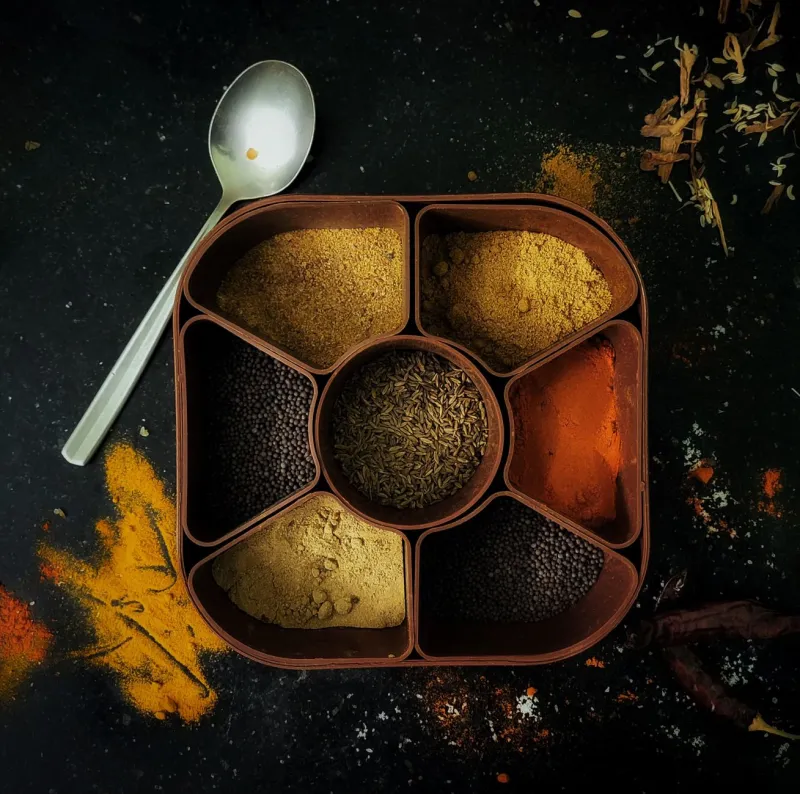
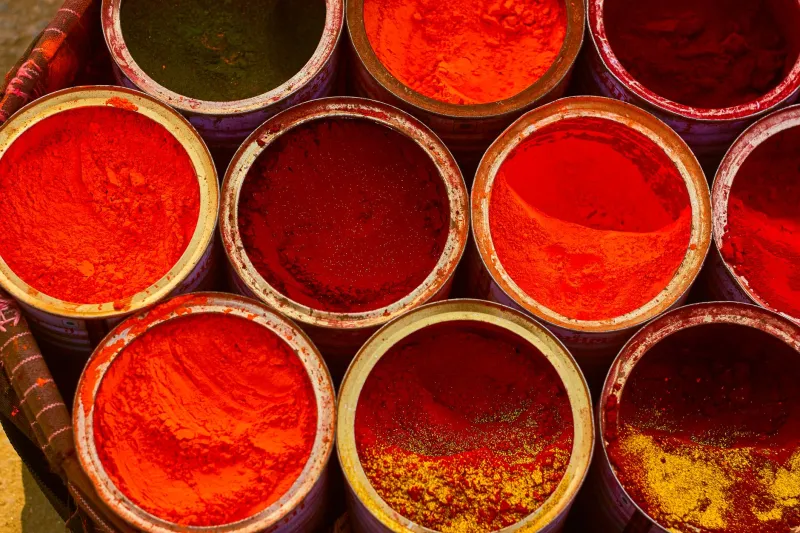
Fresh turmeric is a vivid, almost electric yellow-orange. When it starts looking pale and dusty, it's past its prime. Dried red chilies should be deeply colored — brick red to dark crimson. When they start looking brownish or uniformly matte, the capsaicin and flavor compounds have weakened significantly. Whole black peppercorns should be dark, almost glossy. Dull, gray-looking peppercorns are a bad sign.
Chettinad merchants would examine spices in natural daylight for exactly this reason. Artificial lighting masks fading. If you can, bring a jar to a window before you buy — or at least check your existing spices in good light before you start cooking.
The Texture and Touch Test
Moisture is a spice killer. Clumping in ground spices isn't just inconvenient — it means moisture has gotten in, and that moisture accelerates the breakdown of everything good in the spice. If you open a jar of ground coriander and it comes out in one solid chunk, it's time to replace it.
For whole spices, texture tells you about age differently. Dried chilies should be pliable and slightly leathery, not brittle and crumbling. If a dried chili shatters the moment you touch it, the oils are long gone. Whole cinnamon sticks should still have a slight give — completely rigid, chalky sticks have dried out beyond usefulness.
Run whole spices between your fingers and pay attention to what you feel. Fresh spices have a slight oiliness to them. That's the volatile oil content you can literally feel. Nothing? Move on.
How to Store Spices So They Last Longer Than the Label Says
Once you know how to evaluate freshness, the next step is protecting what you've got. The rules are simple but most American kitchens break all of them.
Keep spices away from heat. That means not above the stove, not next to the oven, not in a drawer beside the dishwasher. A cool cabinet on an interior wall is ideal.
Keep them away from light. Dark glass jars or opaque containers are significantly better than clear glass or plastic. If you love the look of uniform glass jars on a shelf (and who doesn't), at least keep that shelf out of direct sunlight.
Airtight is non-negotiable. Every time you open a spice jar, oxygen gets in. Oxygen degrades volatile oils. Make sure your jars seal properly. Those cheap plastic lids that don't quite close? Replace them.
Buy whole when you can, grind when you need. Whole spices have a dramatically longer shelf life than pre-ground because the outer shell protects the oils inside. Grinding right before you cook is the single biggest upgrade most home cooks can make. A small dedicated spice grinder (or a dedicated coffee grinder) changes everything.
A Quick Audit Worth Doing This Weekend
Pull out every spice in your cabinet. Run each one through the smell test — rub between your palms, breathe in, be honest. Check colors. Feel for clumping. You'll probably find that a third of what you have is past its prime.
This isn't a failure. It's just what happens when spices sit in the wrong conditions for too long. The good news is that once you know what a genuinely fresh, potent spice smells and looks like, you'll never go back to cooking with the flat stuff.
Chettinad cooking — the kind that makes people ask what on earth you did to make a curry taste that good — depends on starting with spices that are actually alive. The merchants who built that culinary tradition knew it instinctively. Now you do too.