Forget Garam Masala: The Chettinad Spice Blend That Actually Does the Job
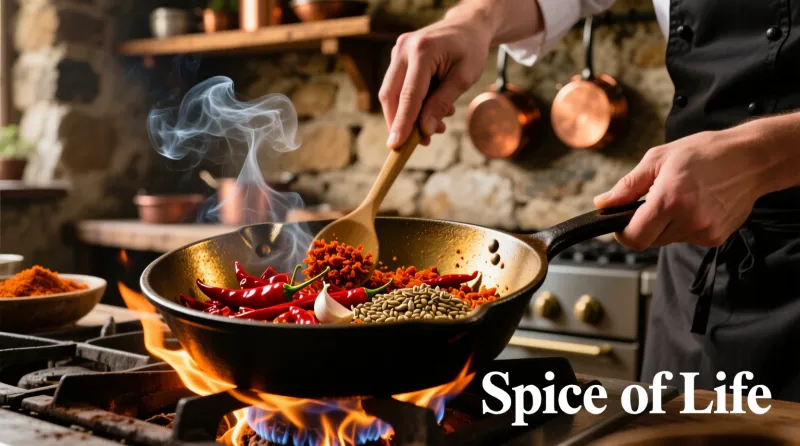
Photo: whole spices toasting in cast iron skillet Indian spice blend, via s.alicdn.com
Let's be honest about something. That little jar of garam masala sitting in your spice cabinet? It's doing the bare minimum. It smells vaguely warm, it adds a brownish hue, and it technically qualifies as "spiced." But if you've ever eaten food made by someone who grew up cooking Chettinad dishes — the kind of cooking that comes from a small region in Tamil Nadu with one of the most sophisticated spice traditions on the planet — you already know that generic garam masala is kind of a placeholder.
Chettinad cuisine has its own spice blend, and it's not garam masala with a rebrand. It's something genuinely different in composition, in technique, and in the way it interacts with food. And the good news? You can make it at home, it stores well, and once you have a jar of the real thing on your counter, you'll reach for it constantly — even on nights when you're just making roasted vegetables or a simple lentil soup.
What Makes Chettinad's Version Different
Garam masala, in most of its commercial forms, leans heavily on the warm, sweet end of the spice spectrum. You get a lot of cinnamon, clove, cardamom, maybe some cumin. It's built to be broadly appealing and shelf-stable for months in a distribution chain. That's not a criticism — it's just what it is.
Chettinad's kalpasi-forward spice blend operates on a different logic entirely. The Chettinad region developed its spice ratios over centuries of trade, and those blends reflect access to ingredients that most of the world didn't have. Kalpasi (stone flower, a dried lichen), marathi mokku (dried flower pods), and star anise all show up in proportions that would look strange to anyone trained on North Indian spice traditions. These aren't just exotic additions for the sake of it — each one contributes a specific aromatic layer that the blend would be noticeably incomplete without.
The heat also comes from a different place. Where garam masala often skips black pepper or treats it as a background note, Chettinad blends treat pepper as a primary player. This is a region that was literally on the ancient spice trade routes — black pepper wasn't a garnish, it was the point.
The Core Ingredients You Need
Here's what goes into a solid Chettinad-style spice blend. You can source most of these online if your local Indian grocery doesn't carry everything:
- Black peppercorns — use more than feels comfortable, probably 3 tablespoons for a medium batch
- Coriander seeds — the base note, 2 tablespoons
- Cumin seeds — 1 tablespoon
- Fennel seeds — 1 tablespoon, adds a subtle sweetness that balances the pepper
- Star anise — 3 to 4 whole pods
- Cinnamon — one 2-inch piece of true cinnamon (Ceylon, not cassia if you can find it)
- Cloves — about 8 to 10 whole
- Green cardamom pods — 6 pods, slightly crushed
- Kalpasi (stone flower) — about 1 tablespoon; this is the ingredient that will make people ask what your secret is
- Marathi mokku — 4 to 5 pods; earthy and slightly bitter, it rounds out the blend
- Dried red chilies — 2 to 3, depending on your heat tolerance
- Bay leaves — 2 dried leaves
- Mace — a small pinch, maybe half a blade
This isn't a rigid formula. Chettinad cooks adjust these ratios based on what they're making and personal preference — that flexibility is part of the tradition. But these proportions give you a reliable starting point.
The Toasting Step You Can't Skip
This is where most homemade spice blends either succeed or fail. Toasting isn't optional, and it's not just about warming the spices up. Heat causes the volatile aromatic compounds in whole spices to activate and develop in ways that grinding them raw simply doesn't replicate.
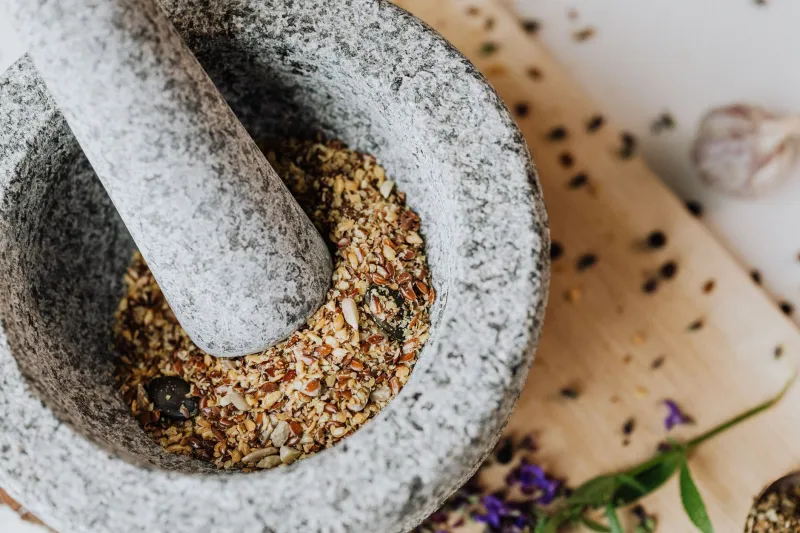
Use a dry skillet — cast iron works great — over medium-low heat. Add your whole spices in stages based on their density. Start with the harder ingredients: peppercorns, coriander seeds, cumin. Toast those for about two minutes, stirring constantly, until you smell them opening up. Then add the more delicate pieces: cardamom, fennel, star anise. Give those another minute. Finally, drop in the kalpasi, marathi mokku, and dried chilies for just 30 to 45 seconds.
The whole process takes maybe five minutes but transforms the raw ingredients into something that smells completely alive. Pull the pan off the heat and let everything cool completely before you grind — grinding warm spices creates steam inside your grinder and produces a paste instead of a powder.
Grinding and Storing It Right
A dedicated spice grinder (basically a repurposed coffee grinder) is ideal here. Grind in pulses rather than one long run to avoid uneven texture. You're going for a fine, uniform powder — not chunky, not dusty-fine. A medium-fine consistency gives you the best of both worlds: it blooms properly in oil and also distributes evenly in dry rubs.
Once ground, transfer the blend immediately to a small glass jar with a tight-fitting lid. Label it with the date. Stored away from heat and direct light — not above the stove, despite what every kitchen design magazine suggests — this blend stays genuinely potent for about three months. After that, it doesn't go bad, but the aromatics start to fade and you're back to doing the bare minimum.
Make a batch every couple of months. It takes about fifteen minutes total and the difference in your cooking will be immediately obvious.
How to Actually Use It
The biggest mistake people make with a new spice blend is treating it exactly like the one it replaced. Chettinad blend isn't just a drop-in swap for garam masala — it behaves differently and should be used differently.
First, bloom it. Heat a tablespoon of oil or ghee in your pan, add a teaspoon of the blend, and let it sizzle for 20 to 30 seconds before you add anything else. That step alone will make your kitchen smell like you've been cooking for hours.
Second, use it early and late. Add it at the beginning of cooking to build a flavor base, and then add a small pinch right at the end to refresh the top notes. Most commercial spice blends can't handle this double-application approach because they're already faded by the time you open the jar. Freshly ground Chettinad blend has enough depth to work both ways.
Try it on roasted sweet potatoes, stirred into a quick tomato sauce, mixed into ground meat for burgers or meatballs, or bloomed in butter and drizzled over popcorn. It works on American pantry staples in ways that feel surprising the first time and completely obvious after that.
Why This Matters Beyond the Recipe
Chettinad's spice tradition isn't just a collection of formulas — it's the accumulated knowledge of a merchant community that spent centuries understanding how flavors work together. The specific ratios in a Chettinad blend aren't arbitrary; they reflect real expertise about balance, heat, and aroma that was refined over generations.
When you make this blend at home, you're not just upgrading your spice cabinet. You're connecting with that tradition in a direct, practical way. And honestly, that connection tastes a lot better than anything in a generic grocery store jar.